





Molly Tea Matcha: All 5 Drinks, Prices & Which to Order
Five matcha drinks. One uses Anchor cream and a Jasmine Zhenwang base. One uses the same Anchor cream and a Bailan-scented orchid base. Two are salted-cheese-and-matcha-cream-top builds layered over Molly Tea’s signature green teas. And one — the camellia matcha that quietly launched as a regional specialty — is the most architecturally interesting drink on the brand’s US menu, deliberately layered like a drinkable cheesecake.
The matcha that’s not quite a matcha latte
Molly Tea’s matcha approach is closer to a matcha cheese tea than to a Japanese-style matcha latte. The brand’s standard build is: pick one of the floral green teas (Jasmine Zhenwang or White Champaca), brew it as the base, then add either a matcha cheese top (made with whipped Anchor cream and matcha powder) or a salted cheese layer with matcha integrated through it.
The result is a drink that gives you three or four distinct flavor zones in a single cup. The bottom: floral green tea. The middle: milk and sweetener. The top: dense matcha cream or salted cheese cap with the matcha powder dusted or whipped through. If you stir it together, you get matcha latte. If you sip through the layers, you get a tasting progression.
This is genuinely different from most other US bubble tea chains, which serve matcha as a powder-and-milk blend in one homogeneous cup. Molly Tea uses matcha as a finishing cream, not as a base.
Two practical implications:
- Sweetness comes from the base, not the matcha. Order at 30% sugar to actually taste the matcha. The brand’s 70% house default flattens the matcha layer under sweetness. At 30% the matcha cuts cleanly through the milk.
- Don’t ask for “no ice” on the cream-top drinks. The cream layer needs the cup volume to hold its structure. Drinks ordered with no ice fill to roughly 80% of the cup, which compresses the cream-tea ratio.
Ranking the five matcha drinks by what’s actually worth ordering
Premium Jasmine Matcha — the right first order
US price: $7.99 (Uber Eats); $6.99 (Chowbus pickup at most stores).
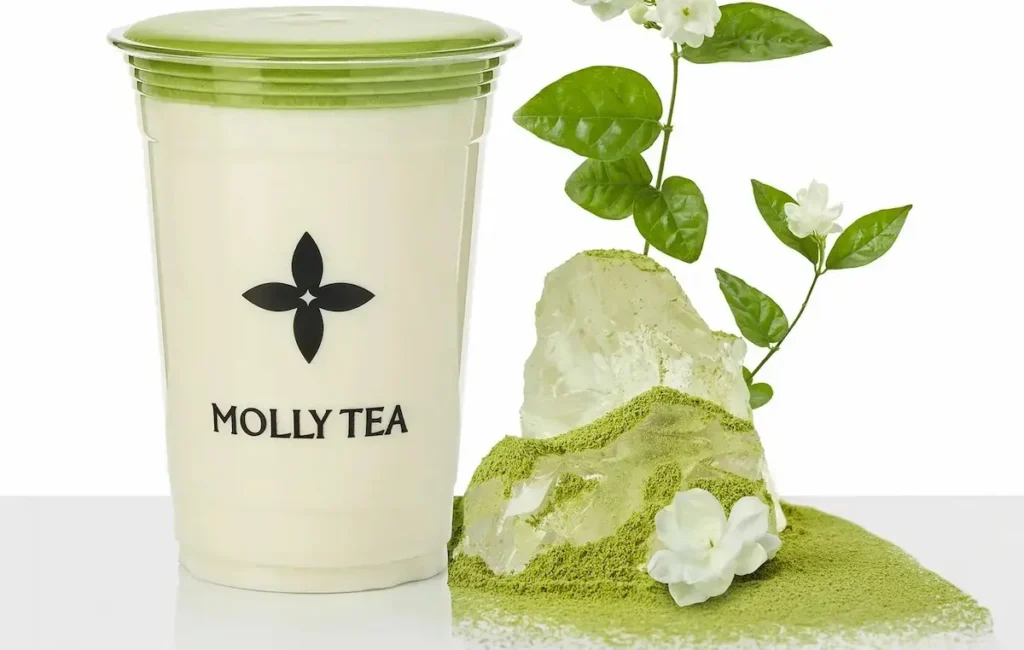
The signature matcha build. Premium Jasmine Zhenwang tea — the brand’s hand-scented jasmine green tea — as the base, with a matcha cheese cream freshly whipped from Anchor New Zealand butter cream and high-grade matcha powder. The jasmine and matcha sit in genuine balance: floral on the front, vegetal matcha on the back, creamy in the middle.
This is the matcha drink that decides whether the brand’s whole matcha approach works for you. If you don’t like this one, the rest probably won’t change your mind. If you do, the camellia matcha becomes worth ordering on a follow-up trip.
Order at 30% sugar, less ice, and stir gently before drinking. The cream layer integrates more cleanly with a partial stir than with a full mix.
White Champaca Matcha — the second-best, and underrated
US price: $7.99 (Uber Eats); $6.99 (Chowbus pickup).
Same matcha cheese cream, different tea base. Bailan-scented White Champaca green tea sources its floral aroma from orchid blossoms rather than jasmine, giving the drink a gentler, more vegetal opening note than the jasmine version. There’s a faint bamboo-leaf finish that comes through if you order at 30% sugar.
If you’ve already tried the Premium Jasmine version and want to taste how the tea base changes the matcha experience, this is the obvious follow-up. The champaca line in general is underordered in the US — most customers default to jasmine, but champaca is closer to a single-estate green tea in character, and the matcha pairs with it cleanly.
Camellia Matcha — the architecture drink
US price: $7.99 (Chowbus pickup at San Gabriel, Arcadia, Brooklyn, Salt Lake, Bellevue, UPenn); $8.99 (DoorDash and Uber Eats with platform markup).
The brand calls this a “drinkable tiramisu” or “liquid cheesecake” and the description holds up. The drink is built in three distinct layers — camellia oolong tea at the bottom, salted buttermilk and cheese-infused milk in the middle, and a matcha cap on top. The brand’s own ordering instructions recommend gently stirring before drinking to integrate the layers.
The flavor profile when stirred: subtle matcha bitterness, savory salted buttermilk, creamy depth from the cheese, and the floral lift of camellia oolong. The “cheesecake” comparison comes from the salted-cream-and-fruit-flavor interplay. It’s the only Molly Tea drink that genuinely asks you to think about what you’re drinking before you drink it.
Not the right first order. The right third or fourth order, once you’ve decided you like the brand’s approach. Availability is widespread on Chowbus pickup but rotates on Uber Eats — if you can’t find it on delivery, check the Chowbus listing for your store.
Matcha Jasmine Salted Cheese — the cheese tea fans’ pick
US price: $8.49 (Uber Eats); $7.49 (Chowbus pickup).
Different build entirely. Instead of the matcha cream top from the Premium and White Champaca versions, this drink uses a salted cheese layer with matcha integrated through it, over a jasmine green tea base. The salt-and-matcha combination is the defining note — bright, savory, with a green-tea cleanness underneath.
Worth ordering if you specifically like the cheese-tea category (HEYTEA-style salted cream tops). If you don’t already like cheese tea, this isn’t the drink that will convert you. The salt is real and present.
Matcha White Champaca Salted Cheese — the polarizing one
US price: $8.49 (Uber Eats); $7.49 (Chowbus pickup).
Same salted cheese build, white champaca tea base. The brand markets this as “rich yet refreshing.” In practice, the champaca’s gentler floral profile gets overwhelmed by the salt-and-matcha cheese top in a way the jasmine version handles better. The jasmine has enough strength to balance the salted cheese; champaca tends to retreat.
If you have to pick between the two salted-cheese matchas, the jasmine version is the safer call. The champaca version works for people who specifically want a quieter base, but it’s the most polarizing drink in the matcha lineup.
How Molly Tea’s matcha sources differ from a standard matcha latte shop
Three sourcing details that explain why these drinks taste different from a Starbucks matcha or a typical bubble tea matcha:
- The matcha powder is sourced from grade-appropriate Japanese or Chinese cultivars (the brand doesn’t publish exact farms, but the powder is ceremonial-adjacent quality and not the dessert-grade culinary matcha most boba shops use). The bitterness is real, not added flavoring.
- The cream is Anchor, the New Zealand grass-fed dairy brand. Anchor cream specifically gives the matcha cheese top its density and the mild dairy sweetness that holds against the matcha bitterness. Most US bubble tea shops use non-dairy creamer or US-sourced heavy cream, which produces a different texture.
- The tea bases are unique to the brand. Jasmine Zhenwang is the hand-scented Hengzhou double-petal jasmine that the brand uses across its signature lineup. Bailan-scented green tea (the white champaca base) is a Sichuan Mengding green tea scented with orchid blossoms — not a tea most US bubble tea shops carry at all.
These three together explain why a Molly Tea matcha tastes notably different from a Starbucks matcha latte or a standard boba shop matcha milk tea. It’s not better by every measure — it’s different in source quality, build philosophy, and serving structure.
For a specific Bay Area location currently carrying all five matcha drinks (including the Camellia Matcha on Chowbus pickup), the Cupertino store guide covers the relevant menu in detail.
FAQs
Which Molly Tea matcha drink should I order first?
The Premium Jasmine Matcha at $7.99. It’s the cleanest expression of the brand’s matcha-cream-on-floral-tea approach. Order at 30% sugar and stir gently before drinking.
Is the Camellia Matcha worth the price?
Yes, if you’ve already had the Premium Jasmine Matcha and want a more complex drink. The three-layer “tiramisu” build is genuinely distinctive on the US bubble tea SERP and worth $7.99 on Chowbus pickup. At $8.99 on delivery platforms, the value is closer but still defensible for the architectural element.
What’s the difference between the matcha cream top and the salted cheese top?
The matcha cream top (used in Premium Jasmine Matcha and White Champaca Matcha) is a whipped Anchor cream blended with matcha powder. It’s slightly sweet and milky with concentrated matcha flavor. The salted cheese top (used in Matcha Jasmine Salted Cheese and Matcha White Champaca Salted Cheese) is a savory cream layer with matcha integrated through it — saltier, less sweet, more like a cheese tea.
How much caffeine is in a Molly Tea matcha drink?
The brand doesn’t publish exact caffeine content. As a reference point: a typical green tea base contains 30–50mg of caffeine per serving, and ceremonial-grade matcha powder adds another 35–70mg per gram used. A Molly Tea matcha drink likely runs in the 80–140mg range total, comparable to a standard cup of coffee. If you’re caffeine-sensitive, the Matcha Jasmine Salted Cheese (less matcha powder, more cream) is the lower-caffeine option in the matcha lineup.