

Why NYC Molly Tea Stores Became “? Tea”
Four New York stores dropped the Molly Tea name in June 2026 and began trading as “? Tea.” The cause was a preliminary injunction issued by the U.S. District Court for the Southern District of New York on June 8, barring the local operator from using Molly Tea trademarks while a lawsuit brought by the brand’s Shenzhen parent proceeds.
The shops did not close on the day of the order. They covered their signs, blacked out their menu images, and kept pouring. What follows is the full record of how a store doing roughly half a million dollars a month ended up with a question mark taped over its logo — and what any of it means if you just want a drink.
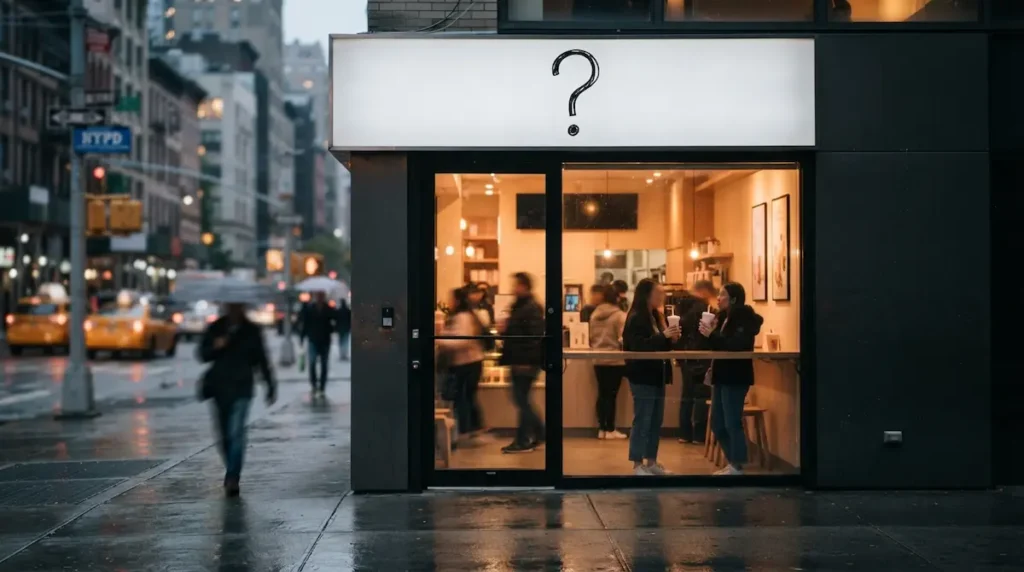
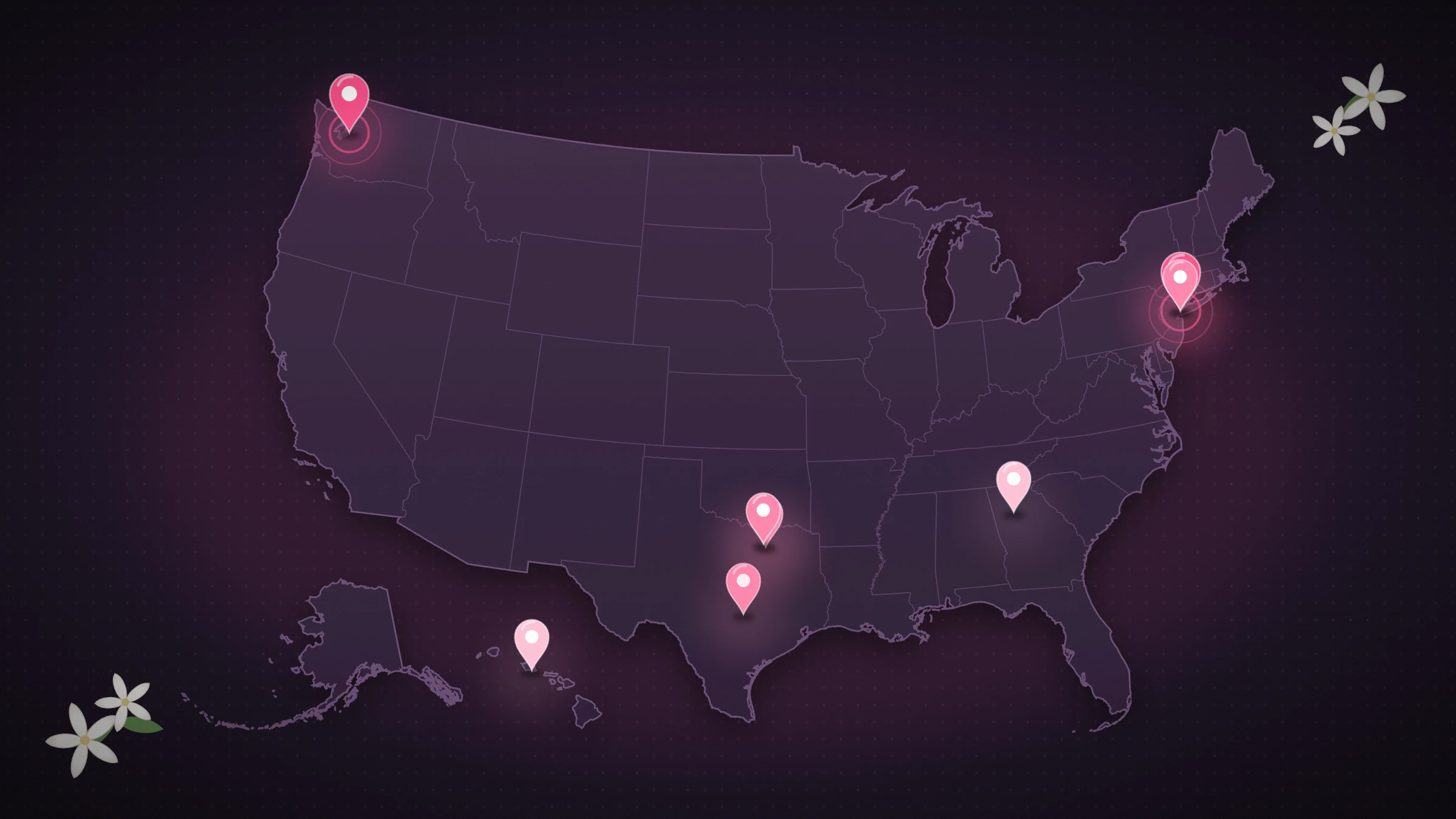
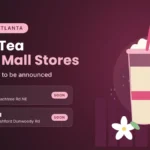
The four stores affected, and where each one stands
The injunction named the New York locations run by one operating partner. Every other Molly Tea store in the country was untouched by this order.
| Store | Address | Status in latest public reporting | Source & date |
|---|---|---|---|
| Flushing | 37-11 Prince St, Queens | Rebranded to “? Tea”; its Yelp listing now carries a closed marker | Yelp listing, checked August 2026 |
| Brooklyn | Sunset Park / Atlantic Terminal area | Photographed trading as “? Tea” | Bloomberg, June 12, 2026 |
| Manhattan Chinatown | 63 Mott St | Named in the brand’s own notice; operating under the question mark | MollyTea Global notice, June 11, 2026 |
| Columbia University | 2857 Broadway | Open, serving under “? Tea” signage | West Side Rag, July 15, 2026 |
One caution on Flushing. The Yelp page for 37-11 Prince Street carries a closed flag. We could not establish whether that reflects an actual shutdown or a listing artifact left over from the branding being stripped — delivery profiles and review pages both had to be de-identified under the court order, and platforms sometimes mark a business closed when its name disappears. Call before you travel. We have updated our Flushing store page with the same caveat.
Stores in Boston, Las Vegas, Edison, Sunnyvale, San Gabriel and elsewhere were not part of this case and continue to trade under the Molly Tea name. Our full US store list shows the current picture.
What the June 8 order actually bans
A preliminary injunction is a holding measure. It freezes conduct while a case is decided; it is not a verdict, and it does not resolve who was right.
The order required the operator to remove the Molly Tea name and marks from:
- storefront signage and interior décor
- cups, sleeves, packaging and printed menus
- staff uniforms
- online ordering platforms and delivery listings
- social media accounts
That last two items explain something people found confusing. When a business vanishes from Uber Eats or its Instagram handle changes overnight, it usually signals a closure. Here it signalled compliance with a court order.
The operator’s answer was to comply in the most visible way available. Rather than invent a replacement name, staff covered the signs with white boards bearing question marks and papered the interiors — menus, uniforms, décor — with them. The stores became, in effect, deliberately nameless. Photographs of the result spread across Xiaohongshu and TikTok within days.
How a top-performing store ended up in federal court
The reporting that matters most here is a long investigation published by 36Kr in June 2026, which worked from court documents and an interview with the operating partner. It is the only account that lays out the chronology. We have cross-checked its dates against Bloomberg, Crain’s New York and Columbia News Service.
December 2023. MHL NY LLC, represented by a partner referred to in reporting as Mr. Liu, signed a brand authorisation and technical service cooperation contract with Molly Tea’s headquarters. The agreement allowed him to develop and operate five stores in the New York area.
April 2024. The Flushing store opened. Mr. Liu had paid a $120,000 transfer fee for the lease and signed it the same afternoon he negotiated it, without waiting for the China team, after losing several earlier sites to better-known brands.
Through 2024. Flushing reached roughly $500,000 in monthly revenue. For context, Chinese tea brands in North America typically run $150,000 to $300,000 per store, and the previous high-water mark in the category was around $400,000.
July 2025. Three limited liability company agreements formalised a joint venture across the first three stores. The brand held 19.9 percent; MHL NY LLC held 80.1 percent. That same summer, Mr. Liu brokered a sponsorship arrangement between Molly Tea and the Brooklyn Nets at Barclays Center.
January 2026. Headquarters sent revised shareholder agreements moving the split to 35 percent brand, 65 percent operator. In the same period it delivered a Franchise Disclosure Document for the first time — more than two years after the relationship began.
March 2026. Headquarters proposed a 70/30 split in its own favour for a planned Columbia University store. Mr. Liu declined. On 31 March he received a message indicating that all stores would be suspended if he did not sign the FDD.
2 April 2026. Headquarters notified stores in Flushing, Brooklyn, Chinatown, Los Angeles and Salt Lake City to suspend operations indefinitely, then cut supply chain, logistics, delivery platform and POS support over the following days.
16–17 April 2026. Mr. Liu sued in Queens County, New York State. A judge issued a temporary restraining order barring headquarters from interfering with his stores’ operations. The Columbia University store opened on 17 April without a joint venture agreement in place.
1 May 2026. Counsel for headquarters sent a letter terminating the brand licence.
15 May 2026. Headquarters filed a trademark infringement action in the Southern District of New York.
8 June 2026. The federal court granted a preliminary injunction.
11 June 2026. MollyTea Global posted a notice on RedNote naming the four New York stores, citing repeated serious breaches of contract and unsuccessful attempts at communication.
The detail almost nobody reported
The April suspension notices did not go only to Mr. Liu.
Stores in Los Angeles and Salt Lake City received the same instruction, and those were run by different partners. According to 36Kr, the common thread was that none of them had signed the Franchise Disclosure Document.
That reframes the story. This was not one operator going rogue. It was a brand attempting to convert an early, informally structured set of joint ventures into a standard American franchise system, and hitting resistance from several partners at once. The New York case is simply the one that reached a courtroom.
Two clauses in the FDD drew the objections. The initial franchise term ran one year, with renewal requiring an entirely new agreement whose terms could shift. And the document offered no territorial protection, meaning an operator could invest in a location and then watch the brand open competing stores nearby. In established US franchising, territorial protection is a normal part of the bargain.
Are the drinks the same?
The short answer: the recipes appear unchanged, and that is precisely what is being litigated.
What is confirmed is that the stores kept their staff, their leases and their existing stock. Columbia News Service, visiting in late June, found business running normally with a 20 percent discount promotion and a new membership push. Drink names still in service at the Columbia store in mid-July included lime cheese premium jasmine, lime cheese jasmine matcha, brown sugar boba matcha, pistachio jasmine tea and gardenia milk tea. New York prices sat between $5.59 for brewed teas and $8.99 for topped or layered drinks.
What is unresolved is whether they are entitled to keep making them. Molly Tea’s claim goes beyond signage: it alleges the operator continued using confidential recipes, training materials and other proprietary information after the licence ended. The court has not ruled on those trade-secret claims.
So if you order a jasmine milk tea at a “? Tea” counter today, you are most likely getting the same build from the same trained staff. Whether that continues depends on how the case resolves. We are not in a position to tell you it will, and neither is anyone else writing about this.
Two courts, two rulings, and why both sides say they won
This is the part that gets garbled most often, including in some national coverage.
Queens County, April 2026. The operator sued first, in state court, and obtained a temporary restraining order stopping headquarters from cutting off his stores. That is why the shops kept running through April and May.
Southern District of New York, June 2026. Headquarters countersued in federal court on trademark grounds and obtained a preliminary injunction stripping the brand name.
Both orders are provisional. Neither decided the underlying dispute. The state order protects operations; the federal order protects the mark. They coexist, which is exactly how four stores can be simultaneously open and forbidden from saying who they are.
The positions remain far apart. Headquarters says the operator opened stores without authorisation, operated outside the licence, and formed a separate entity — Genesis Brand Management LLC — to sign the Columbia lease without the brand’s equity, and it is seeking more than $5 million. The operator says he never regarded himself as a franchisee, that headquarters took part in the Columbia store from site selection through pre-opening preparation, and that the equity revisions amounted to reclaiming control after he had absorbed the risk of entering the market.
Neither account has been tested at trial.
This is not the Louis Vuitton case
Search results for Molly Tea in mid-2026 blend two entirely separate legal matters. Keeping them apart matters if you want to understand either.
The New York case is a franchise and trademark dispute between Molly Tea and its US operating partner, heard in American courts, concerning who may use the brand name in New York.
The Louis Vuitton case is a Chinese trademark matter. In July 2026 the Suzhou Intermediate People’s Court ordered Molly Tea to pay 10.3 million yuan, roughly $1.5 million, over a four-petal floral emblem the court found too close to Louis Vuitton’s monogram. Molly Tea said it would appeal, and has since shifted its logo from black-and-white to a purple and gold treatment with a more three-dimensional look.
Different countries, different parties, different subject matter. The only connection is timing, and the fact that both landed inside a single month made the brand’s name unusually loud that summer. The media intelligence firm CARMA recorded around 360 million views on the trademark and cultural-ownership discussion, with a further 42 million mentions tied specifically to the New York question-mark rebrand.
What can happen next
Reporting on the case identifies four realistic paths, none of them certain:
- Settlement. The parties negotiate, and the New York stores either return to the brand or exit cleanly.
- Permanent rebrand. The operator builds “? Tea” into a standalone business, keeping the sites and staff without the licence.
- Renewed cooperation. Terms are renegotiated and the Molly Tea name goes back up.
- A longer fight over damages, trade secrets and intellectual property.
Columbia News Service noted a useful precedent: in a 2015 case, a federal court stopped a former Dunkin’ Donuts franchisee from continuing to use the brand’s marks, reasoning that customers would be confused and the brand harmed. Post-termination trademark cases tend to favour the brand owner on the name itself. What they resolve less predictably is everything underneath it — recipes, methods, and money.
Molly Tea has said the matter is before the courts and that it will follow the final decision.
Practical questions if you’re a customer
Can I still use my Molly Tea points or membership at a “? Tea” store? Treat them as unrelated. The stores promoted new membership benefits of their own after the rebrand. Anything tied to Molly Tea’s official app or program sits with the brand, not the operator. Ask at the counter before you assume a balance carries over.
Do gift cards still work? Unclear, and it will depend on which entity issued them. Bring the card to the store and ask directly rather than ordering on the assumption it will scan.
Why can’t I find the store on Uber Eats under Molly Tea? Delivery listings were covered by the injunction. Search the question-mark name or the street address instead.
Is the staff the same? Yes, by all available reporting. Staff, leases and stock stayed with the operator.
Should I avoid these stores? That is a personal call, not a safety one. This is a commercial dispute between a brand and its partner. Nothing in the filings concerns food safety or hygiene.
Frequently asked questions
- Why did Molly Tea change its name in New York? It did not. A court ordered the local operator to stop using the Molly Tea name after the brand’s Shenzhen parent terminated its licence and sued for trademark infringement. The stores chose the question mark themselves.
- Is “? Tea” the same company as Molly Tea? No. Same people, same premises, same staff — but no longer licensed to use the Molly Tea brand while the case runs.
- Which Molly Tea locations are affected? Only the four New York stores named in the June 11 notice: Flushing, Brooklyn, Manhattan Chinatown and Columbia University. Stores in Los Angeles and Salt Lake City were caught in the earlier April suspension notices, under different partners.
- Is Molly Tea leaving the US? No. The brand has continued opening elsewhere through 2026, including Rockville, Maryland in April and locations in Texas.
- Is the injunction permanent? No. It is preliminary, meaning it holds until the case is decided.
- Will Molly Tea return to New York? Unknown. The brand retains its trademark rights in the US, so it can license new operators. Nothing has been announced.
How we verified this
Every date and figure above traces to a named source. The chronology comes from 36Kr’s June 2026 investigation, built on court documents and an interview with the operating partner. Court and injunction details were cross-checked against Bloomberg and Bloomberg Law (12 June 2026), Crain’s New York (15 June 2026), Columbia News Service (23 June 2026) and the Columbia Daily Spectator (6 July 2026). Store-level status came from West Side Rag (15 July 2026) and Yelp listings checked in August 2026. The Louis Vuitton ruling is drawn from South China Morning Post, Fortune and Marketing-Interactive reporting from early July 2026.
Where the two sides disagree, we have said so rather than picking one. Where a court has not ruled, we have said that too.
This is a live case. Filings move, stores reopen, listings change. We recheck this page monthly and log revisions in our news and updates section. If you have seen something at one of these stores that contradicts what is written here, tell us and we will verify it.